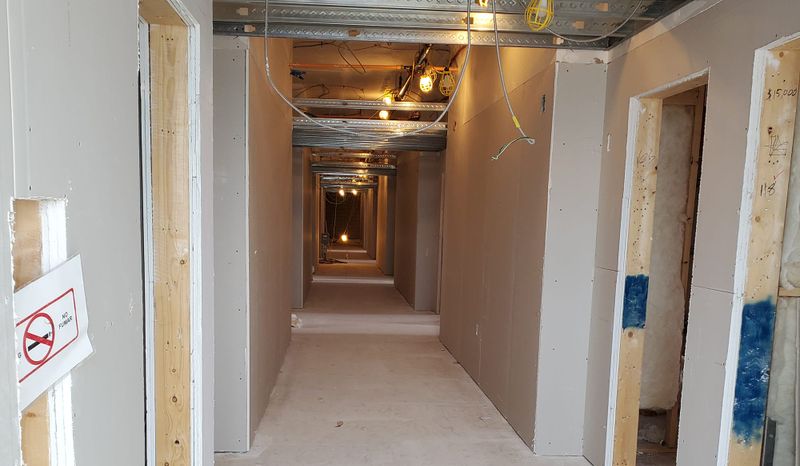
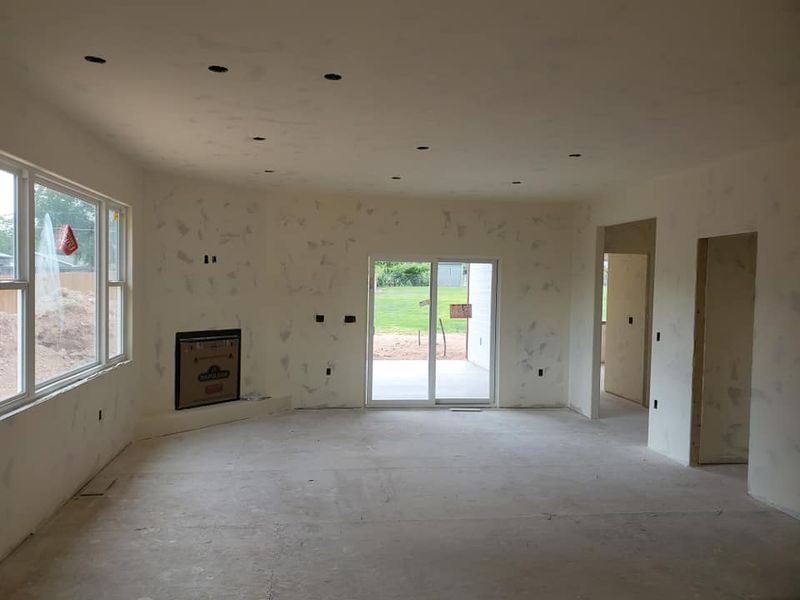
Drywall Installation in Fruita, CO
Hang, tape, mud, sand and texture, done as one job by the same hands. Palafox Construction finishes walls and ceilings for homes across the Grand Valley and out to Montrose, Delta County and Rifle.
- New builds, remodels, basements and repairs
- Smooth walls or matched texture
- Ready for the painter, or we paint it too
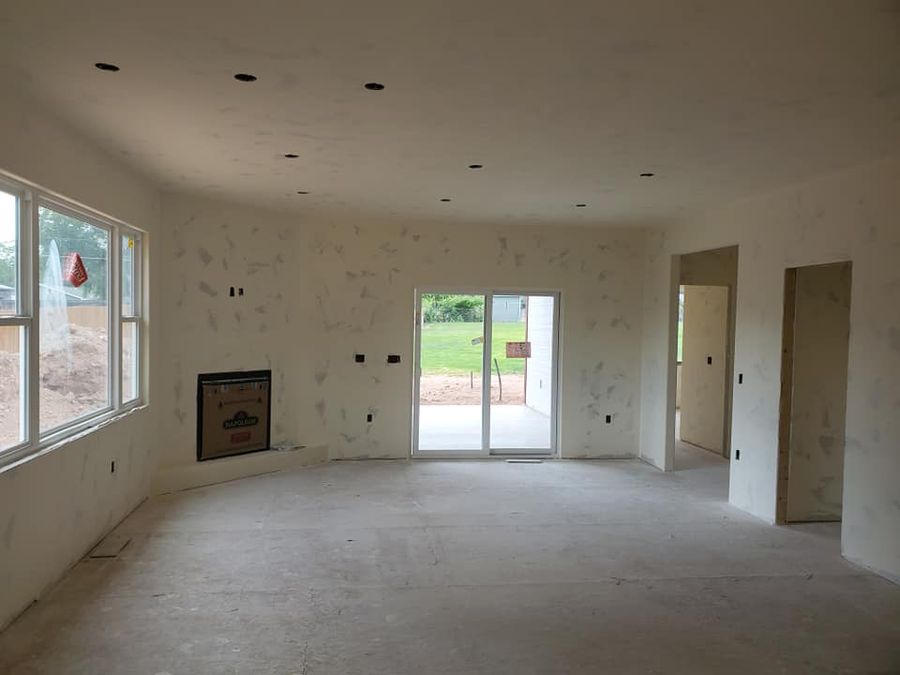
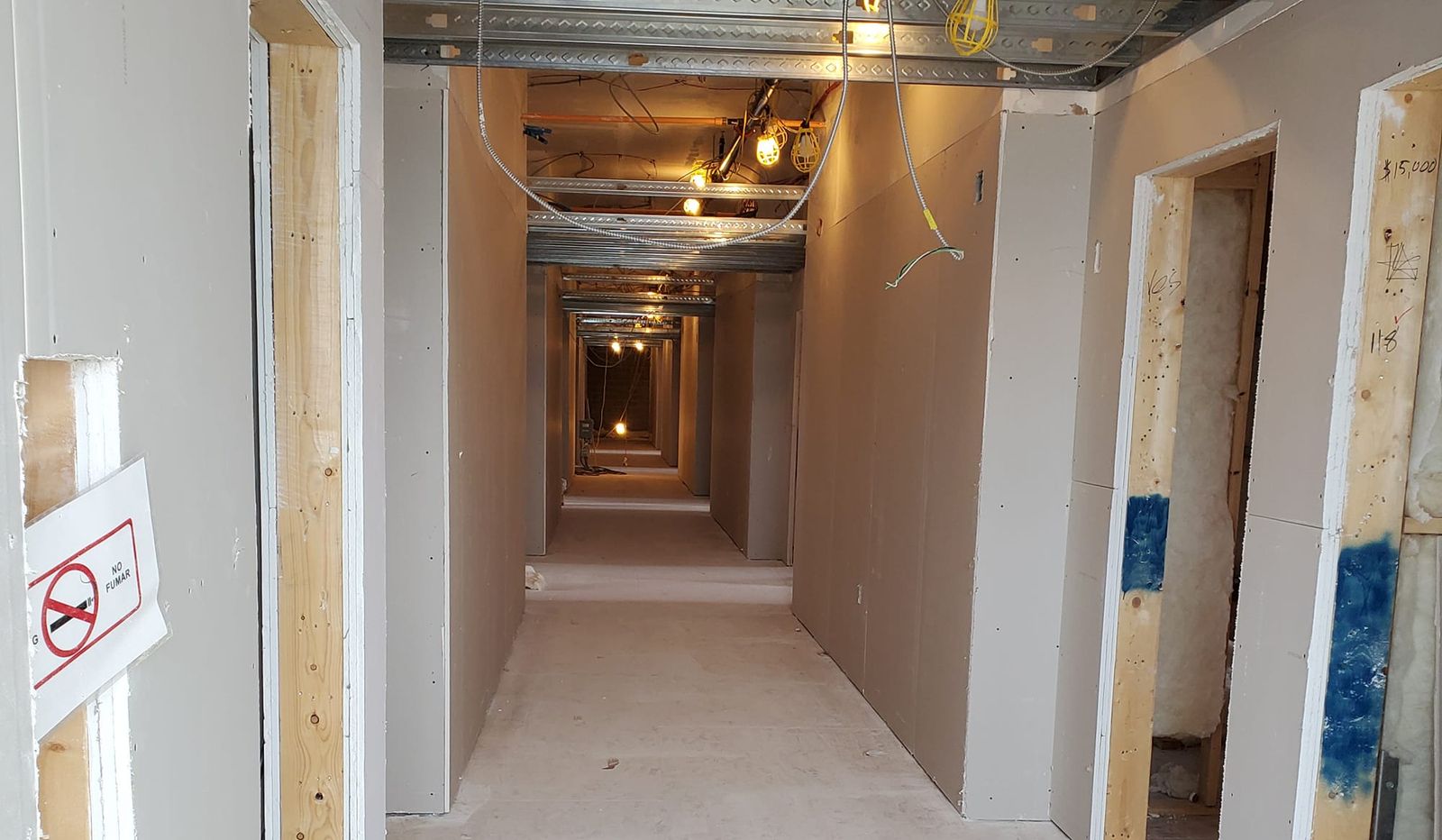 Taped and ready for mud
What does drywall installation involve?
Drywall installation is a chain of steps, and the wall you see depends on every link. Palafox Construction hangs board on the framing, tapes every joint, builds the surface with thin coats of mud, sands it flat, then leaves it smooth or textured to match the room. Homes in Fruita, Grand Junction, Clifton, Montrose, Delta County and Rifle run from mid-century ranches to new subdivision builds, modular homes and basements, so we start by looking at the framing, the ceiling heights and the light in each room before choosing board, mud and finish level. The target is a wall that looks flat in low afternoon light from a west-facing window, because that light shows every shortcut. Rushing a coat or skipping a sanding pass is where most callbacks start, so we pace the work around drying time instead of the clock.
- 1Hang
Board goes up tight and flat
We check the studs for bows, then hang sheets with the long edge across the framing and screws sunk just below the paper. Fewer butt joints and flat framing mean fewer problems to hide later.
- 2Tape
Every joint and corner is taped
Paper or mesh tape is bedded into the first layer of mud at each seam, inside corner and bead. This is the step that holds a joint together when the house moves.
- 3Mud coats
Thin coats, each one dried
The surface is built up in several thin coats, each one wider than the last so the edges feather out. Each coat has to dry before the next goes on, which is why a room takes days, not hours.
- 4Sand
Sanded flat, then checked by light
We sand the joints level with the board, then look along the wall with a work light held at a low angle. Ridges and pinholes show up there, before paint makes them permanent.
- 5Texture or smooth
The finish that suits the room
Leave it smooth, or spray and knock down a texture to match the rest of the house. Matching an existing texture takes a few test patches, and we do them before touching the wall.
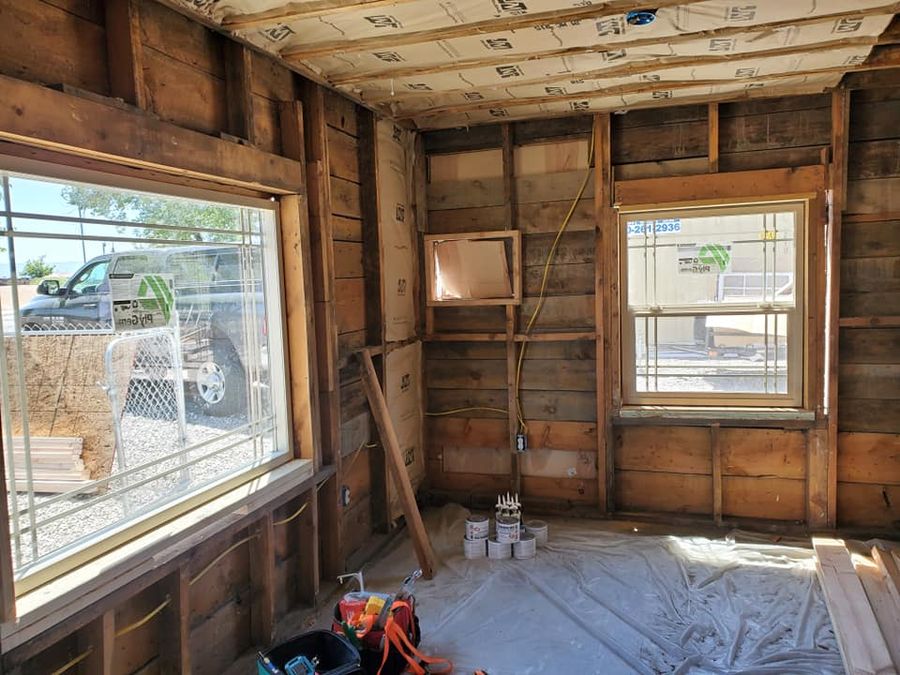
Level 3, Level 4 or Level 5: which finish do you need?
Drywall finish levels describe how much mud goes on and how smooth the wall ends up. They are general trade terms, and the right one depends on the paint, the texture and the light in the room.
3Level
Joints and screw heads are taped and get two coats of mud, lightly sanded. You can still see faint ridges and tool marks under flat light.
Good for: walls that will get a heavy texture or a thick wall covering, where the texture hides the joints.
4Level
Joints get three coats of mud and screw heads get three, sanded smooth. It is the usual finish for walls that will be primed and painted.
Good for: most bedrooms, living rooms and basements with flat or eggshell paint, or a light texture.
5Level
Everything in Level 4, plus a thin skim coat of mud over the whole wall so the paper and the joints look the same. The smoothest finish you can get.
Good for: glossy paint, long hallways, tall walls and rooms with big windows where low sun rakes across the surface.
More coats and more sanding mean more labor, so the finish level is one of the things that affects your quote. We will tell you which level makes sense for each room. This is trade shorthand, not a certification.
Why does drywall crack in the Grand Valley?
Drywall cracks here because the house keeps moving after the mud dries. Fruita sits at about 4,500 feet in a semi-arid high desert with around 9 inches of rain a year, and four local conditions do most of the damage.
Dry air
Low humidity pulls moisture out of lumber, so studs shrink and twist and joints pull apart, most often in the first couple of heating seasons in a new house.
Seasonal swings
Hot summers, cold winter nights and big day-to-night swings make framing expand and contract. Taped seams along ceilings and corners take the strain first.
Settling on clay soils
The valley's clay soils shrink and swell with moisture, so foundations can shift a little. Diagonal cracks at door and window corners often point to this.
Nail pops and screw pops
As studs dry and move, fasteners push out and leave round bumps under the paint. Fixing one properly means re-setting the fastener, not just painting over it.
Repair starts with the cause. We re-screw loose board, cut out damaged areas, re-tape, mud and feather the patch, then match the texture so it disappears. If the crack keeps coming back, the framing is still moving and the fix has to account for that. We work throughout our service areas, from Fruita to Rifle.
New build, remodel, basement or repair
The steps are the same, but each kind of job brings its own problems. Here is what we look at first.
New build
Open framing, clean runs and a schedule set by the other trades. We hang once the framing, electrical and insulation are done, and coordinate texture with the painter. Subdivisions on the north and northeast sides of Fruita are growing fast.
Remodel
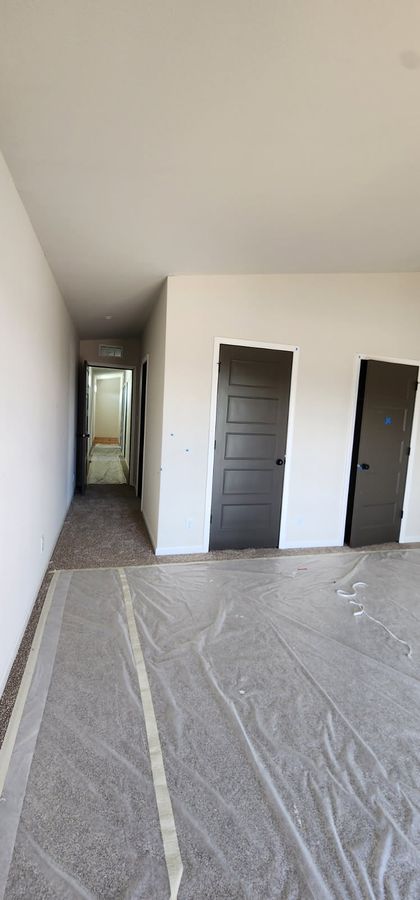
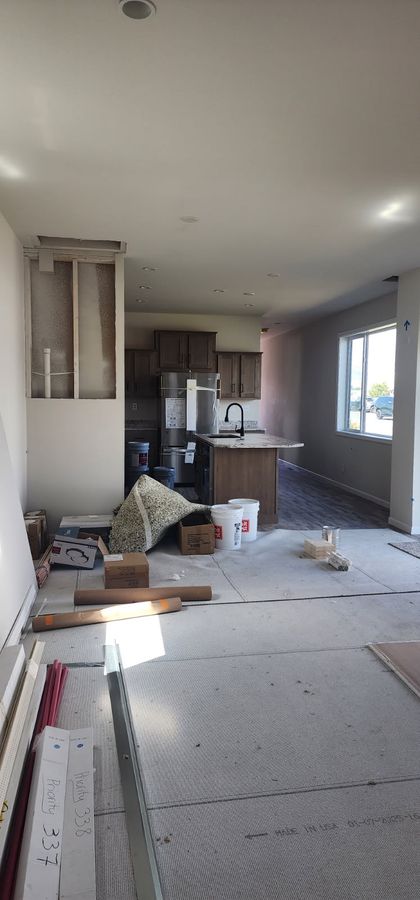
New openings, moved walls and patching into old ones. In a ranch from the 1970s or 1980s we match the existing texture, and protect floors and finishes while we work.
Basement
Finishing a basement means framing, board, ceilings and soffits around ducts. We work around the mechanicals and plan joints so the low light in a basement does not show them.
Repair
Cracks, nail pops, water-stained ceilings and holes from old fixtures. We find out why it failed, fix that, then patch, texture and leave the wall ready to paint.
Drywall questions from Fruita homeowners
Not seeing your question? Use Get a Quote and tell us about the room.
How much does drywall installation cost in Fruita?
The price depends on the job, so there is no one flat number. Square footage, ceiling height, board thickness, the number of corners and openings, the finish level, the texture, and whether old walls need repair first all change the quote. Photos of the space or a walk-through let us price it accurately. Use Get a Quote to start.
What is the difference between a Level 4 and a Level 5 finish?
Level 5 adds a thin skim coat over the entire wall, and Level 4 does not. Level 4 is smooth enough for most flat or eggshell paint. Level 5 evens out the paper and the joints so glossy paint and low raking light, like a big west-facing window, will not show them. Level 5 costs more.
How long does hanging and finishing drywall take?
A typical room takes several days, because each coat of mud has to dry before the next one. Hanging goes quickly, while taping, coating and sanding take most of the time. The dry Grand Valley air helps mud dry, but rushing a coat leads to cracks and shrinkage later. Larger jobs and Level 5 finishes take longer.
Can you repair drywall cracks and nail pops?
Yes, repair is part of what we do. We re-set popped fasteners, cut out and replace damaged board, re-tape the seam, then mud, sand and match the texture. If a crack has returned more than once, the framing or foundation may still be moving, and we will tell you what we see before patching it again.
Do you do drywall in Grand Junction, Clifton and beyond?
Yes, we work in Fruita, Grand Junction, Clifton, Montrose, Delta County and Rifle. Fruita is our home base, and the rest of the Western Slope is within reach. Tell us your town when you request a quote. You can see every town on our service areas page.
Ready for walls that look flat in any light?
Tell us about the room and send a few photos. We will walk you through the finish level and what drives the price.
Also see: Framing Interior painting Service areas
Monday to Friday, 8 am to 6 pm. Closed Saturday and Sunday.